
Soft Starter for Water Pumps: A Technical Guide for Pumping Stations from XICHI
Oct 23, 2026
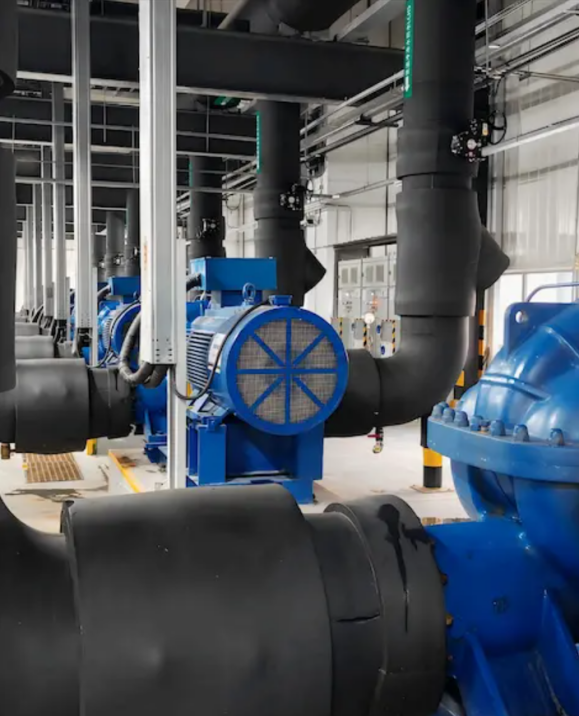
Xian, Shaanxi Oct 22, 2026 (Issuewire.com) - Water pumping stations serving municipal supply networks, agricultural irrigation canals, regional flood control infrastructure, and complex industrial wastewater treatment facilities rely heavily on large-capacity centrifugal pumps. Starting these heavy motor loads directly across the line often creates substantial mechanical stress and electrical disturbances. Direct-on-line activation induces sudden torque surges, fluid acceleration, and severe line voltage drops that can interrupt surrounding equipment, destabilize local distribution grids, and accelerate premature mechanical wear. Implementing a high efficiency soft starter allows operators to control initial voltage levels, gradually ramp up current, minimize inline current spikes, and manage motor deceleration during shutdown. As an established China high efficiency soft starter for water pump supplier, Xi'an XICHI Electric Co., Ltd. examines the engineering challenges involved in water pump operation and details how specialized starting devices protect piping networks, improve operational reliability, optimize power consumption, and reduce long-term system maintenance.
Understanding the Operational Dynamics of Pump Loads
Centrifugal pumps exhibit unique mechanical characteristics that differentiate them from general industrial loads like conveyors, blowers, or crushers. The hydraulic pressure and flow rate within a fluid transport system follow the head-flow curve. When an electric motor starts abruptly at full voltage, it generates an instantaneous torque pulse that accelerates the fluid column within seconds. This rapid change in fluid momentum leads to liquid pressure waves known as water hammer. Water hammer generates intense shock pulses that travel back and forth through the pipeline, causing valve damage, pipe flange leaks, pipe support fatigue, and accelerated wear on mechanical shaft seals.
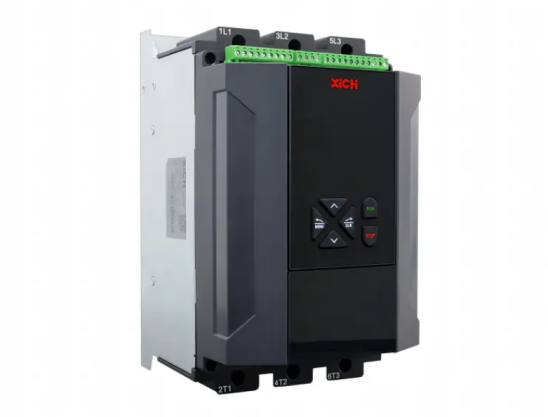
A soft starter for water pump applications mitigates these stresses by controlling the firing angle of solid-state silicon-controlled rectifiers to gradually step up the applied terminal voltage. This smooth voltage ramp controls motor torque production, enabling fluid acceleration that matches system dynamics. Equally critical is the controlled stopping sequence. When a pump motor shuts down instantaneously, the sudden collapse of pressure causes the liquid column to recoil, producing severe hydraulic shock. Specialized soft starters incorporate dedicated pump stopping curves--often utilizing torque control or customized deceleration ramps--that gradually taper down power to gently close check valves and suppress pressure spikes. For example, the XICHI XST260 soft starter features built-in pump control and pump cleaning functions. The pump control function optimizes the starting and stopping current profile under varying load conditions, reducing mechanical stress and extending pump service life. Meanwhile, the pump cleaning function enables forward and reverse rotation of the motor to remove debris or buildup from pump impellers, helping prevent blockages and ensuring reliable pump operation.
Efficiency and Operational Continuity in Pumping Stations
In continuous pumping operations, power dissipation inside control cabinets must be kept to a minimum to maintain overall system efficiency and control thermal accumulation. Solid-state thyristors in a soft starter conduct current during the acceleration phase. However, running continuous current through these semiconductor components during steady-state operation generates ongoing heat losses. A common approach to reducing these losses is the use of an internal bypass contactor, a design adopted in XICHI's low-voltage motor soft starter series.Once the motor reaches full operating speed, the internal control logic automatically energizes the bypass contactor, diverting main load current away from the thyristors and through low-resistance contacts.
This internal bypass design reduces internal power loss by up to ninety-eight percent during running periods, eliminating the need for bulky external bypass contactors, simplifying panel wiring, and extending the operational lifespan of power electronic components. Continuous pumping operations also demand reliable integration with plant automation systems. XICHI equips its soft starters with standard industrial communication protocols, such as Modbus RTU and Profibus, enabling real-time transmission of voltage, current, power factor, and diagnostic alarm status to supervisory control and data acquisition systems. Programmable digital inputs and relay outputs allow direct interfacing with liquid level transmitters, pressure sensors, and main PLC units. This connectivity enables automated multi-pump rotation strategies to equalize running hours and supports automatic fault-turnover routines to ensure uninterrupted fluid transport if a primary pump trips.
Selection and Installation Boundaries for Soft Starters
Selecting the proper soft starter requires evaluating motor specifications, duty cycles, and environmental installation conditions. Selecting an oversized unit does not guarantee better performance, as matching the starter's current rating to the motor's actual full-load current is essential for precise current limit protection and accurate thermal modeling. Engineers should evaluate several key parameter boundaries:
- Motor Ratings and Duty Cycle: The unit must match the motor rated power, pole count, and full-load current, taking into account starting frequency per hour. Frequent starts require appropriate thermal sizing and adequate cooling intervals between acceleration cycles.
- Cabinet Thermal Management: Soft starters generate heat during acceleration phase ramps. Enclosure layouts must include sufficient clearance above and below the starter module to support natural convection or forced fan ventilation.
- Environmental and Altitude Derating:At installation altitudes exceeding 1000 meters above sea level, reduced air density impairs cooling efficiency and dielectric strength. Operational ratings must be adjusted downward based on ambient temperature and altitude factors.
- Pipeline Hydraulic Coordination: Acceleration and deceleration ramp times must be field-tuned to match pipeline length, static head, and check valve response times. Proper tuning prevents fluid column separation while avoiding unnecessary heat accumulation in motor windings during extended starts.
Final Thoughts
The main value of applying soft starter technology in modern pumping stations lies in extending the operational lifespan of pipeline infrastructure, valves, mechanical seals, and motor windings. By controlling starting torque and managing deceleration ramps, operators prevent destructive water hammer, eliminate line voltage dips, and lower overall maintenance costs. Integrating these tailored control units delivers long-term economic dividends through lowered thermal stress, predictable electrical demands, reduced downtime, and enhanced continuous automation across municipal and industrial water networks. Plant managers, system integrators, and project engineers seeking tailored motor control schemes can explore advanced power electronic options designed specifically for demanding pumping environments. For technical selection assistance and specific motor-pump matching tables, please visit XICHI official website at https://www.xichielectric.com/.
Source :XI'AN XICHI ELECTRIC CO., LTD.
This article was originally published by IssueWire. Read the original article here.
More News











YOUR NEWS, OUR NETWORK.
Do you have Great News you want to tell the world?
Be it updates about your business or your community, you can make sure that it’s heard by submitting your story to our network reaching hundreds of news sites across 6 verticals.